
Testimonials
For more than three decades, Presbyterian ministers have gathered through the Foundation to read theology, to pray, and to hold one another accountable in the work of ministry. These are their reflections on what the seminars have meant to them in their work and, above all, in their walk with Jesus Christ.
“The Foundation for Reformed Theology seminars have been by far the most meaningful continuing education experience in my twenty-one years of ordained ministry.”

In their words
“It is the best “continuing education” I have participated in since seminary.”
Dr. Catherine M. “Cathy” NorthrupPastor, Community Church of the Verdes, Rio Verde, ArizonaRead the full letter “Not only has the theological study been of great benefit, but the friendships I have gained in our study group have been a source of great strength and joy.”

“I am a better pastor because I continue to grow in my faith, knowledge, and theological insight.”

“Save for a doctoral program, no other form of study leave over the last decade has BEGUN to compare with the quality of this time in study.”
“I find myself reading more of the great writers in the history of the church, and less of current fads that blow with the wind.”
“It has kept me reading theology on a regular basis and continually thinking theologically about my life and work.”


The letters
Fourteen seminar members wrote to the Foundation about what the seminars have meant to them.
Dr. Catherine M. “Cathy” NorthrupPastor, Community Church of the Verdes, Rio Verde, Arizona
Participating in a seminar through the Foundation for Reformed Theology has been an integral part of my ministry. First, even after Dr. Leith’s death, it has served in a way to keep me “connected” to this man who was a great mentor in ministry and taught me so much.
Second, it has served to keep me grounded in Reformed theology.
Third, it has provided me with a group of colleagues in ministry that has been close and supportive like no other group of colleagues, even though we might actually see each other only once a year. I believe this is due to the quality of the ministers in the group, as well as our shared faith and values.
Finally, it has made me a better minister, improving my preaching, teaching, and pastoral care. It is the best “continuing education” I have participated in since seminary.
I was invited by The Reverend Dr. John Burgess, a professor and valued colleague from Pittsburgh Theological Seminary, to help start the first “Pittsburgh Seminar” of the Foundation. From the moment I heard the idea, this was a “no brainer!” An opportunity to build potentially lifelong colleagues, studying serious Reformed theology once a year, funded by the Foundation, who in his or her right mind could say no? Years later, I still remain amazed and mystified at how some folks just don’t participate or drop out! This is a gift beyond compare!
What has this meant? Professionally, once a year I have had the JOY of revisiting the language and exegesis of seminary at a truly scholarly level, but now with the added benefit of years of pastoral experience. The readings have helped me to grow in my own theology and in my own beliefs, and they have thoroughly helped me to grow as a Reformed pastor-theologian. Save for a doctoral program, no other form of study leave over the last decade has BEGUN to compare with the quality of this time in study.
Personally, I have been blessed with the gift of long time friends and colleagues. Oh, we have had some serious disagreements over the years (always on theology), but the relationship extends beyond meeting one week a year. Early in my ministry I had a young toddler (the second child I had baptized) die as a result of ingesting kerosene and, on the same day, assisted in the decision to terminate life support of my father-in-law. All of this happened within days of the death of a brother (who died days before his fiftieth birthday).
It was a traumatic time, but I had a call to fulfill. As I prepared to conduct two funerals on the same day, one for the toddler and one for my father-in-law, several members of our seminar appeared. They approached me, realizing the stress of the moment, and simply said, “We are here to support you, to pray for you, and to do what is needed. If at ANY point in either service you need us to help, just nod, and it will be done, up to and including doing the entire service.” Their mere presence, not to mention their prayers, helped me function effectively in this ministry that I have been called to fulfill. They did not NEED to come forward, but their mere presence was a blessing beyond measure!
The Lilly Foundation has conducted in depth research on just why it is that so many ministers leave their callings in the first five years of ministry. There has also been research conducted on the high level of stress and depression that ministers experience. One of the KEY mitigating factors is to develop collegial groups, much like the seminars of the Foundation, as it is through these prayer filled, Spirit filled, Christ led, covenant partnerships that ministers are truly fed with streams of living water. I have tasted of this well, and the water is fine!
Thank you for the joy, the opportunity, the pleasure to grow in God, through Christ, by the guidance of the Holy Spirit, through the Foundation for Reformed Theology.
Rather than being a student of the late John Leith, I had the unique privilege of being John and Ann’s pastor following John’s retirement from Union Theological Seminary. The Leiths moved to the Presbyterian Home in Easley, South Carolina, and began worshiping at the Easley Presbyterian Church, where I served as pastor. It was more than a little intimidating to have Dr. Leith sitting on the front pew each Sunday morning. That is, until he was confined to a wheelchair, and then he sat in front of the front pew. Both John and Ann were always very gracious to me, and I enjoyed numerous visits with them. I always left their apartment with both arms full of books.
I’ve never been quite certain if John invited me to be in a study seminar as an act of hospitality, or because he felt I needed theological remediation. I’m guessing it was a bit of both. Regardless of the reason, it has been one of the best experiences of my ministry. Not only has the theological study been of great benefit, but the friendships I have gained in our study group have been a source of great strength and joy. Getting to spend a week in Princeton in the spring is pretty nice, as well.
Having the opportunity to know the Leiths in a pastoral, rather than academic, setting has been one of the great blessings of my life and ministry. That blessing continues each year through my study group, and I am grateful Dr. Leith invited me into this excellent program.
The Foundation for Reformed Theology has been of significant help to me. It has given me the opportunity to continue to read and study solid Reformed theology and reflect on how it impacts the practice of ministry. I have grown in my theological understanding of a wide range of topics, through my yearly reading and discussion group. As a working pastor, I realize how valuable theological understanding is for an effective ministry. I am a better pastor because I continue to grow in my faith, knowledge, and theological insight. I am grateful for Dr. Leith’s vision in setting up this program and for all those who carry on its work.

The Foundation for Reformed Theology seminars have been by far the most meaningful continuing education experience in my twenty-one years of ordained ministry. The annual gathering in Southern California with colleagues and friends in which we read, share, pray and fellowship together is something which challenges me deeply and refreshes my spirit. Our seminars have focused on the major works of Augustine, Calvin, Edwards, Barth, and Leith, and we have studied such subjects as eschatology, natural theology, and the gospel in a pluralistic society. My mind and heart have been expanded, and I am most grateful for the visionary leadership of John Leith who saw the need to encourage and strengthen the church through the theological and spiritual renewal of its pastors. May God continue to bless the stewardship of the Foundation and the outstanding work of its chief caretaker, James Goodloe, until Christ returns!

The Foundation’s support for a week of study in Reformed theology has been a wonderful gift over the years. It has given me an incentive to read books of serious, challenging theology that I probably would not have undertaken on my own (sad to say). The reading list consists of important works of serious theology that have been beneficial to all the members of our group in our various ministries. It certainly would please Dr. Leith to know that many ministers throughout our denomination are being challenged by the most profound thinkers in the Reformed tradition, and are being shaped by theology that is Biblical and Reformed. My appreciation for Dr. Leith has grown over the years as I have seen the importance of our week of study and the other activities of the Foundation. Thanks are also due to those who keep the Foundation functioning.
Mr. Ernest L. Gardner IIITeaching Elder, Kannapolis, North Carolina
I don’t believe my story is unique when observed along with those of my colleagues, but I am happy to share these words. I have always been a student of history. This includes the history of the PC(USA) and its antecedents’ origins. Mainly, I enjoy hearing the stories of colleagues who graduated many years before I did in 2000. Often those recollections include stories of professors whose knowledge of practical theology existed in such close association with the professors’ academic area of specialty that courses seemingly as dry as church history or historical interpretation often provided brilliant insights in more everyday matters like working with sessions, or how to organize a thoughtful service bearing witness to the resurrection.
In my short experience, the Foundation seminars have been not only an opportunity to engage in conversations about theoretical aspects of ministry but also the practical incorporation of theory and practice. Each of us ministers comes prepared and ready to review for the group a portion of the reading for that year’s topic. Although we often deviate from the topic at hand in laughter and tears, relationships are nurtured and calls to ministry are reaffirmed in ways that could never had occurred otherwise. Unlike some higher governing body meetings, energy is not wasted posturing or jockeying for a better seat at the table because through the ministry of Word and through prayer each pastor in the seminar participates simultaneously as both teacher and student.
The goal of Better Preaching, Better Teaching, Better Pastoral Care does not begin only when pastors return home. These goals are realities which manifest themselves among and between seminar members in the context of reading great theology and during group discussions, meals, and even late night serendipitous conversations during the five days our seminar meets together.
My seminar has been a significant blessing not only to me but also to my wife, who also belongs to a Foundation seminar based at her seminary. The Foundation provides opportunity for seminar members to engage in readings that bring out the best of each member. The time away is not vacation. It’s inspiration!

I joined the Pittsburgh seminar a couple of years after it had its inception. One or two early members could not continue and when Clint asked me if I were interested, I jumped at the opportunity. I have valued and cherished this association ever since. Here is why: I am an “unrepentant” Calvinist. Born and raised Presbyterian, in an age when that still meant Reformed, I was nurtured and educated in a system of theology which really helped me to understand my own faith. The doctrines and tenets of Reformed belief have made my journey meaningful and challenging. As a church member, and elder, I was somewhat aware of changing standards and applications within our denomination, but only minimally.
Realizing a call to vocational ministry somewhat later in my adulthood, the experience of seminary, the challenges of scholasticism, and the rigors of theological preparation became a testing ground for my ability to present a cogent theological position to the world. In spite of the best efforts of many academicians and their fellow travelers throughout the seminary process, I emerged from Pittsburgh Theological Seminary the committed and “unrepentant” Calvinist referred to above.
Entering the pastorate and engaging in the mandated participation in the councils and ministries of the larger church made me acutely aware of how far the PC(USA) has fallen from being truly Reformed. I became, for a while, a loud, visible, and probably quixotic figure in the skirmishes for the traditional core of our denomination. I watch with increasing sadness the continued slide of this once faithful part of the body into syncretism, progressive humanism, and universalism.
My succor and peace has come from a decision to refocus on the task God first called me to do, the proclamation of His Word and the right administration of the sacraments in the congregation to which I have been called. This is where the Foundation has been such a gift to me.
Each Spring when we gather, I find myself with friends (new and old) who care for one another, challenge one another, and encourage one another in our calls. Each of us serves a unique, diverse, and faithful congregation of the particular church. I go home each Spring with the knowledge that there are at least seven sisters and brothers engaged in the same effort; that the “Five Solas” [five emphases of the Reformation: Scripture alone, grace alone, faith alone, Christ alone, and to the glory of God alone] are alive and well; and that regardless of the failure of the larger church, there is a faithful remnant where the Word is truly preached, the sacraments are rightly administered, and church discipline is being maintained.
In addition, we all go home better equipped. We may spend the entire week on Augustine and one part of his Confessions or on marriage and the family in Calvin’s Geneva. When we do, I come back to Village Presbyterian Church with a broadened and enhanced understanding which in turn strengthens my teaching and preaching here.
Now, if you could just do something about the excessive focus on Barth and his neo-orthodoxy . . .
The Foundation’s program of seminars has greatly enriched my ministry for more than twenty years. The annual getting together with colleagues to read theology and seriously discuss the trends occurring in the church and world from a Reformed perspective has truly been a blessing. It has kept me reading theology on a regular basis and continually thinking theologically about my life and work. When I was a pastor, the annual seminars kept my preaching and ministry fruitful. Now as a presbytery staff person, the seminars have enriched my care of clergy in their pastoral roles, and well as helping me to think theologically about the work of Presbytery. Thanks for the opportunity to share my experience.
I just returned from ten days of vacation in the Jackson Hole area of Wyoming. I used some of that time to read and think without interruptions from email, Facebook, telephone, or other devices. Nine days without email, I think that is a real Sabbath! I used some of the time to think about how the Foundation for Reformed Theology has impacted or influenced my call.
First, it has intensified my reading of the theologians who have shaped the Reformed faith. I do not write a sermon or Bible study nor plan a session study without reading both John Calvin (Institutes of the Christian Religion and commentaries) and Karl Barth (Church Dogmatics and other writings).
Second, the elders of our church are receiving a strong theological education. We spend the first two hours of the three hour session meeting in worship, table fellowship, and study. Last year we spent a year studying Hughes Oliphant “Scoti” Old’s book, Worship Reformed According to Scripture. This year we are spending a year studying The Book of Confessions. My friends Karl and John are having a profound impact on the thinking of our Ruling Elders, and this thinking is influencing the decisions they are making in the particular congregation and in serving in higher governing bodies. They are beginning to understand that theirs is a calling not a committee assignment. We spend considerable time in searching the Scriptures before making any major decision. We spent an entire year studying Ephesians and Calvin’s Commentary on the epistle before writing a strategic ministry plan for Forest Hills.
Third, it has informed and strengthened my study. I remember that once Calvin was a “contemporary” theologian, so I do not shun current thinking. However, the benchmark is set by the orthodox Reformed theologians.
Fourth, I serve as the moderator of the Committee on Ministry. Part of my role is to work with sessions in conflict, particularly when they and the pastor are at odds. Unfortunately, there are two points that I am finding to be universal when engaging conflicted sessions: the elders do not understand their sense of call nor are they educated in the tenets of the Reformed faith, and they have no mission beyond their own walls (I define mission as the propagation of the good news of the Gospel of Jesus Christ, as opposed to good works). Conversely, I have wonderful stories to tell of congregations who are led by elders grounded in Reformed theology.
In closing, thank you and the board for continuing Dr. Leith’s vision and keeping some of us grounded.
Mr. Timothy J. HavlicekPastor, First Presbyterian Church, Morehead City, NC
Thanks to the seminar for a helpful week. Let me speak beyond just the time away to renew in good Christian fellowship, meaningful conversation on church issues that matter with trusted friends, and wonderful food in large quantities, which would in itself be rewarding enough to continue. I refer now to the heart of the matter, and the reason for this Foundation. I am pushed, this year, more unwillingly than before, to move beyond my comfort zones in reading and thinking to delve into the roots of my Reformed faith and to struggle with how it speaks significantly to my ministry in my congregation and to today’s Church as a whole. As much as I (lovingly) voiced my issues with wading through Karl Barth’s writing, no doubt that venture has affected my preaching and liturgy. Our review of Barth’s sermons has forced me to review my own with an eye toward ensuring that Jesus and His word, and not my stories pointing toward Jesus and referring to His word, are the focus. Sounds so simple, but so important. There is the power of the gospel we proclaim!
Another thing I appreciate is how each member brings differing strengths and perspectives and adds to the complexity and depth of the seminar.
Mr. William Richard “Dick” NeellyHonorably Retired, Dalton, Georgia
Jim, for sixteen years I have benefitted from studying Reformed Theology by way of bibliographies provided first by John Leith and later by you and others on the board of the Foundation. The small group with which I have been privileged to study has met each spring, mostly at Union Seminary in Richmond; and the discipline of the reading, some beforehand and some the week of our gathering, has nudged me to read in depth to a degree that I might not have done otherwise over these years. It has been a rich gift, one for which I am grateful and, therefore, I am pleased to support the Foundation in a small way financially every year. Please convey to the members of the Board my appreciation for the work they do.
The Foundation for Reformed Theology has been a great blessing to my ministry. Each year a group of us who are ministers and friends gathers together, usually at Union Seminary, to read one of the bibliographies prepared by Dr. Leith. Since we have been doing this for fifteen years, we have read about some of the great themes of Christian faith: Providence, Election, Prayer, the Holy Spirit, Missions, the Christian Hope, and many more.
These readings have strengthened my personal life and my ministry in many ways. For one thing they have enhanced my study time during the other fifty-one weeks of the year. My year-round study and reading is more focused and substantive. I find myself reading more of the great writers in the history of the church, and less of current fads that blow with the wind. These readings in turn have helped my preaching and teaching, and even my pastoral care.
Karl Barth says “The being of [humankind] is a being in gratitude.” (Church Dogmatics, III.2, p. 167) One of the things I am grateful for in my ministry is the continuing witness of the Foundation for Reformed Theology.

Often ministers consider themselves isolated from other ministers. The Foundation for Reformed Theology, by its publications and especially by its seminars, directly addresses this concern by linking ministers with each other for serious study, prayer, and reflection upon substantive writings. Everyone who participates in these seminars goes back home better equipped to serve the Lord and His church.


Read with colleagues.
Seminars gather around six to eight pastors for a week each year around one of nearly fifty bibliographies. Membership is by invitation only. Application may be made to the executive director, who corresponds personally with each prospective participant.
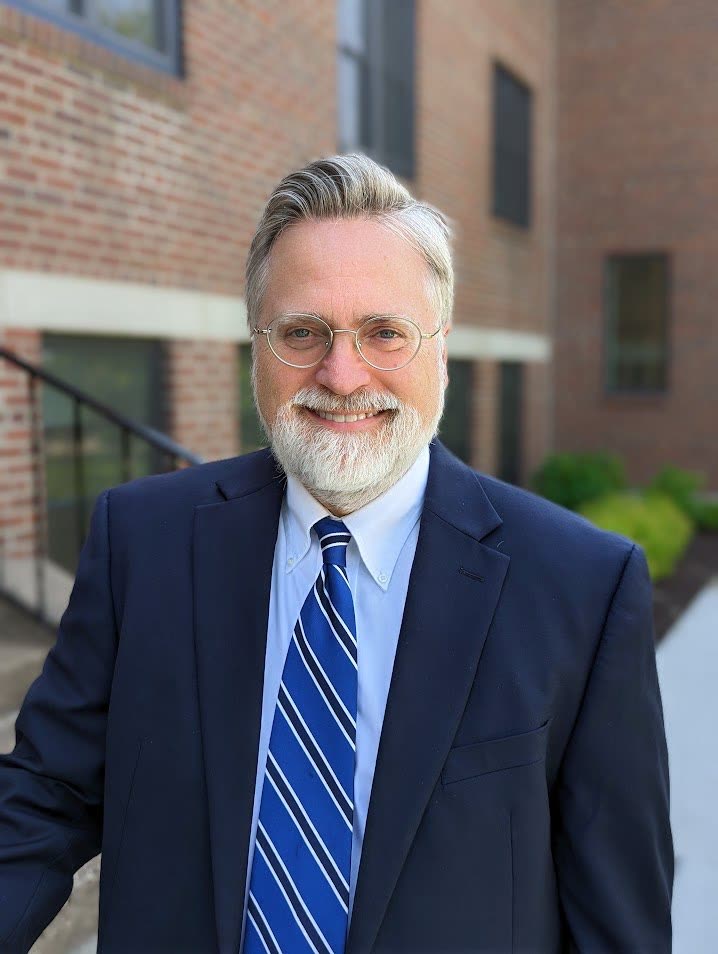
Dr. Richard E. Burnett
Executive Director
Inquiries are welcomed at any time.
Stay in touch.
Receive seminar announcements, new bibliographies, and quiet word from the Foundation a few times each year.
Support the Foundation.
The Foundation’s work depends on the generosity of those who value faithful, scholarly study within the church.